Chrono Trigger: the JRPG that beat time itself
Released in 1995 by Squaresoft on the Super Nintendo, Chrono Trigger united Sakaguchi, Horii and Toriyama in a time-travel JRPG that became legend. We look back at why.
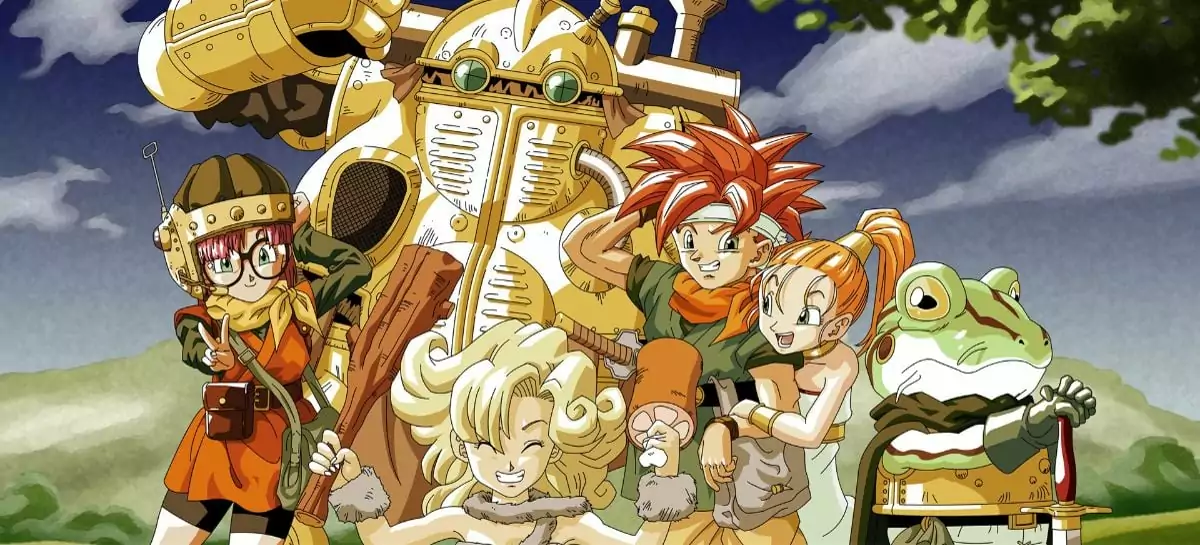
Few cartridges left as strong a mark on me as the one with Chrono Trigger's blue spine. I slid it into my Super Nintendo thinking it was just another pretty RPG, and I walked away convinced I had played the best JRPG of my life. Thirty years later, I still think the same. Let me tell you why.
The "Dream Team" nobody thought was possible
In 1995, Squaresoft brought together three names that were each already legends on their own, and called the result the "Dream Team." There was Hironobu Sakaguchi, the father of Final Fantasy. There was Yuji Horii, creator of Dragon Quest. And there was Akira Toriyama, the man behind Dragon Ball and the character designer of Dragon Quest, handling the art. It was like fielding Pele, Maradona and Cruyff on the same team. The stated goal was to make "something no one had done before," and looking back, it's fair to say they pulled it off.
The game came out on the Super Famicom on March 11, 1995 in Japan and reached the American Super Nintendo on August 22, 1995. Many of us only got our hands on it much later, via emulator or import, but it never truly aged.
Time travel, from mechanic to narrative
Time travel isn't just a theme in Chrono Trigger: it's the backbone of everything. You start at a cheerful medieval fair, fall through a portal and suddenly you're jumping between prehistory, the Middle Ages, the present, an apocalyptic future and the End of Time. The genius of it is that your actions in one period echo in the others. Planting a little seed in the past changes the landscape of the future. Fixing a historical mistake rewrites the present.
This stitching between eras turns the RPG into an emotional puzzle box. You're not just saving the world from Lavos, that cosmic parasite that devours the planet; you're understanding how each era connects, and every revelation gives you that chill of "I can't believe this ties into that."
Seamless battles and combined Techs
Anyone coming from other JRPGs of the era was thrown off in the best possible way: there was no separate battle screen. Enemies appeared right on the map and combat happened there, with no flashy cut and jingle. That made everything more fluid and less tiring.
Under the hood ran the Active Time Battle system, inherited from Final Fantasy, with those little bars filling up in real time. But the masterstroke were the Techs: special moves for each character that could be combined. Two Techs became a Dual Tech; three formed a Triple Tech. Positioning mattered, because many attacks hit an area depending on where the enemies were. Building the right party to unleash a devastating combo was pure satisfaction.
13 endings and New Game+
Chrono Trigger was one of the first games that made me want to finish it again the moment the credits rolled. The reason has a name: New Game+. When you beat it, you start over with your characters at the level they were, which lets you face Lavos at very different points in the story.
This unlocks the game's 13 endings, an absurd rarity for the time and something Nintendo Power itself called revolutionary. Each ending changes depending on how far you got before defeating the villain. The most legendary of all: if you beat Lavos right at the start of a New Game+, using only Crono and Marle, you get access to a special version of the End of Time where you talk with avatars of the developers themselves - Sakaguchi, Horii and Toriyama. It's the kind of crazy reward that makes us love this era of games.
The soundtrack that stays in your head forever
If there's one thing that tugs at the heart of everyone who played it, it's the music. Most of the soundtrack is by Yasunori Mitsuda, then a young and practically first-time composer who poured his soul into the project - literally to the point of falling ill during production. When he had to step away, the person who came in to finish some tracks was none other than Nobuo Uematsu, the master of Final Fantasy.
The result is timeless themes like "Corridor of Time," "Frog's Theme" and "Chrono Trigger" itself. To this day, if I hear the first few notes, I'm instantly back in front of that tube TV.
Characters we never forget
No RPG holds you without good characters, and here the cast is flawless. Crono, the spiky-haired hero who never speaks a word and still becomes an icon. Marle and Lucca, the adventure partners. Robo, the robot with more heart than most people. Ayla, the cave warrior. And two absolute favorites: Frog, the cursed knight turned into a frog who speaks like a Shakespearean noble, and Magus, the dark antagonist whose story delivers one of the game's most striking twists.
Why it's always named among the best
It's not nostalgic fan exaggeration: Chrono Trigger is constantly listed as one of the greatest video games ever made and one of the most important titles of the 16-bit generation. It got everything right at the same time - narrative, battle system, pacing, soundtrack, art - and it still respects your time, with no filler or mandatory grind. It's an RPG anyone can start and few can put down.
Where to play it today
The good news is you can relive this classic without hunting down a cartridge. The Nintendo DS (2008) version is considered the most complete, with animated cutscenes, a dual-screen interface and even a new dungeon. On iOS and Android (from December 2011) you play with touch controls, and a major 2018 update brought back the cutscenes and other features. And on Steam, since 2018, it runs in high resolution on PC - the start was shaky, but later updates rounded out the experience nicely, with visual options and quality-of-life improvements.
Whatever platform you choose, do yourself a favor: set aside a weekend, step through the first portal and let time slip by. Chrono Trigger is still as awesome as it was in 1995 - maybe even more, because now we know just how special it was.