Legend of Legaia: The Cult PS1 RPG Where You Fought with Combos
Released by Sony in 1998, *Legend of Legaia* introduced the Tactical Arts system, which transformed turns into combat combos. We look back at the Mist, the Ra-Seru, and why this PS1 JRPG became a cult classic.
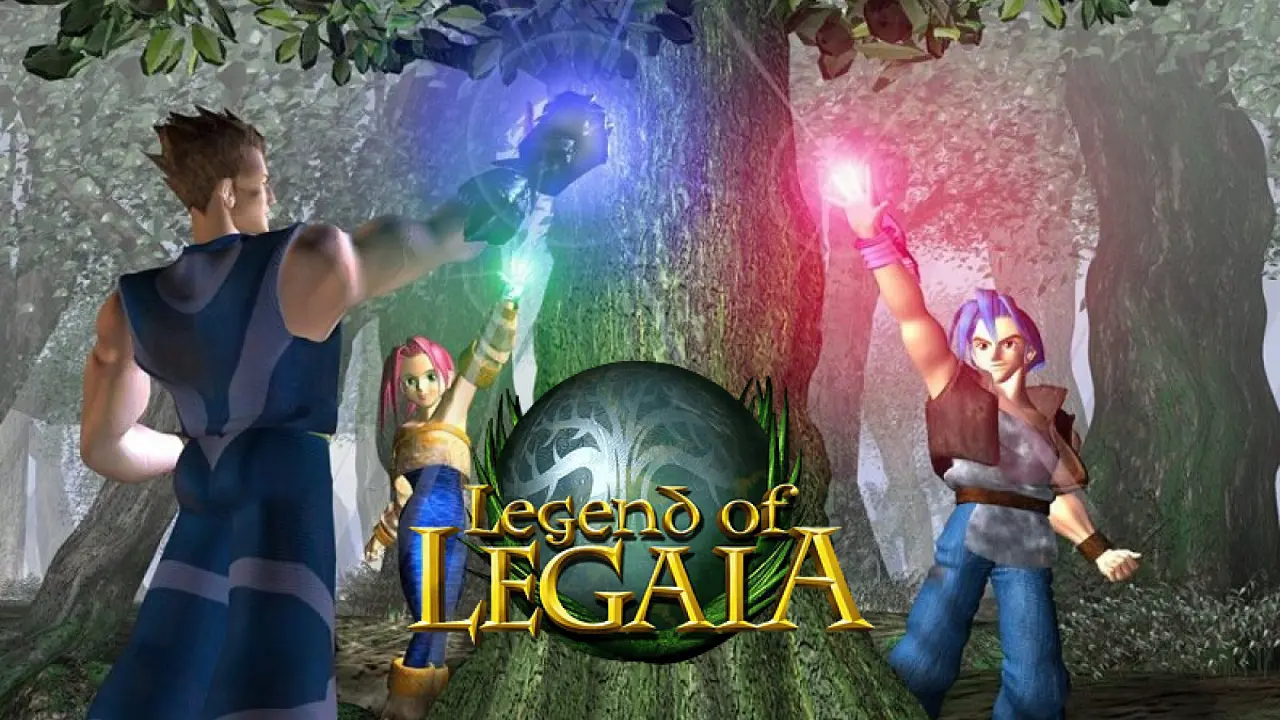
There are games you stumble upon by chance and never forget. That’s how it was for me with *Legend of Legaia*: a weird cover at the video rental store, zero hype, not a single friend talking about it. I popped it into the PlayStation expecting just another generic RPG and walked away with some of the most satisfying combat I’ve ever seen in a turn-based game. More than 25 years later, I still stand by my opinion: this is one of the most underrated JRPGs of the PS1 era.
Born in the Shadow of Giants
To understand Legaia, you have to remember the context. The game was released in Japan on October 29, 1998, and arrived in North America on March 16, 1999 (Europe wouldn’t see it until May 2000). It was the height of the golden age of JRPGs on the PlayStation: Final Fantasy VII had become a global phenomenon, Xenogears had just come out, and Final Fantasy VIII was already dominating magazine covers. Any RPG that didn’t bear the Squaresoft logo was doomed to fight for attention with whatever was left over.
Legend of Legaia was exactly that: a project by Sony Computer Entertainment itself, developed by Prokion and produced by Contrail—the Sony label that also handled series like Wild Arms and Alundra—with a soundtrack by composer Michiru Oshima, who years later would become famous for the music of Fullmetal Alchemist. A team to be reckoned with, but without the billion-dollar marketing budget of the competition. The result: the game sold well enough to earn a re-release as a Greatest Hits title in the U.S. and surpass 300,000 copies, but it never became the talk of the town. RPGamer rightly called it the sleeper hit of 1999—and the game was even nominated for RPG of the Year at the D.I.C.E. Awards that year.
Tactical Arts: The Turn That Became a Battle
If Legaia were to be remembered for just one thing, it would be the Tactical Arts System—and what a system it was. Instead of selecting “Attack” from a menu and watching, you built each attack using the directional pad: up for a high kick, down for a low kick, left and right for arm strikes. On their own, these were just ordinary punches and kicks. But certain sequences—discovered through trial and error, jotted down in a notebook, or shared with friends—unlocked the Arts: named combos with their own animations and absurd damage.
It was brilliant because it transformed turn-based combat into something active. Every battle became a mini-puzzle straight out of a fighting game: How many inputs do I have this turn? Can I string two Arts together in a row? Should I spend AP now, or use the Spirit command to defend, recover points, and unleash a monstrous combo on the next turn? Discovering a new Art on my own gave me a sense of accomplishment that very few RPGs of the time delivered. While other games asked me for patience, Legaia asked me for skill and muscle memory. I felt like I was playing Tekken inside an RPG.
A World Choked by the Mist
The story also had personality. In the world of Legaia, humans lived in harmony with the Seru, symbiotic creatures that granted powers to those who wore them. Until the Mist appeared—a mysterious fog that drives the Seru mad and transforms their wearers into monsters. Humanity retreats to walled villages, living in fear of the outside world—and this oppressive, almost post-apocalyptic atmosphere gave the game a much darker tone than most.
Hope comes from the Ra-Seru—special Seru immune to corruption—and the Genesis Trees, capable of dispelling the Mist when awakened. The journey is essentially this: reigniting the trees, liberating city by city, and discovering who is behind the mist. It’s not the most intricate plot of this generation, but it has a rare sense of purpose—each awakened tree visibly changes the map, and watching the Mist recede was immensely satisfying.
Vahn, Noa, and Gala: a small but effective trio
Instead of a massive cast, Legaia opted for just three main heroes, each linked to a Ra-Seru. Vahn, the silent protagonist from Rim Elm, is bound to the Ra-Seru Meta; Noa, a girl raised in the wild by a Ra-Seru-bearing she-wolf, pure chaotic energy and the heart of the group; and Gala, the serious, tough monk who must set aside his convictions to unite with a Ra-Seru. The trio works because it’s streamlined: with the antagonist Songi provoking Gala at every encounter, there’s time to grow attached to everyone. And each character had their own unique combo style in battle, which reinforced their identities in the gameplay.
Why It Became a Cult Classic (and Why Almost No One in Brazil Knew About It)
In 1990s Brazil, JRPGs were already a niche genre: games in English, dozens of hours long, with no translation. If Final Fantasy VII was already “for those who knew English,” imagine an RPG with no advertising, that few people saw on store shelves, and that barely appeared in Brazilian magazines. Legaia spread by word of mouth and through copies at video rental stores—and anyone who played it became an evangelist. It’s the perfect definition of a cult game: small in reach, but huge in the memories of those who played it. To this day, when I mention the game, I get two reactions: “never heard of it” or an immediate knowing smile.
The Legacy and the Sequel
The game got a sequel, *Legaia 2: Duel Saga*, released for the PlayStation 2—with a new story and characters, while retaining the Arts system as the series’ hallmark. Legaia 2 has its merits, but it was released during a time when the PS2 was flooded with excellent RPGs and met the same fate as the original: it went unnoticed. After that, silence. The series never returned, and Legend of Legaia remains one of those titles that fans request on every list of “classics that deserve a remake”—or at least a re-release in the current PlayStation’s classic game catalogs.
Is it worth playing today?
Absolutely. The 3D graphics have aged like every other polygonal PS1 game, and the pace is slower than that of modern RPGs, but the Tactical Arts system remains unique—to this day, very few games have done anything similar, and none with the same charm. Oshima’s soundtrack is still beautiful, the atmosphere of the Mist still works, and the campaign is a decent length by today’s standards. If you love JRPGs and have never played it, you’re looking at one of the last great hidden gems of the 32-bit era. I envy anyone who’s about to discover their first Art today. Do yourself a favor: let the Mist in.