Master System Sonic: the first hedgehog for Brazilians
Made by Ancient with a Yuzo Koshiro soundtrack, the 1991 Master System Sonic was millions of Brazilians' first contact with Sega's hedgehog.
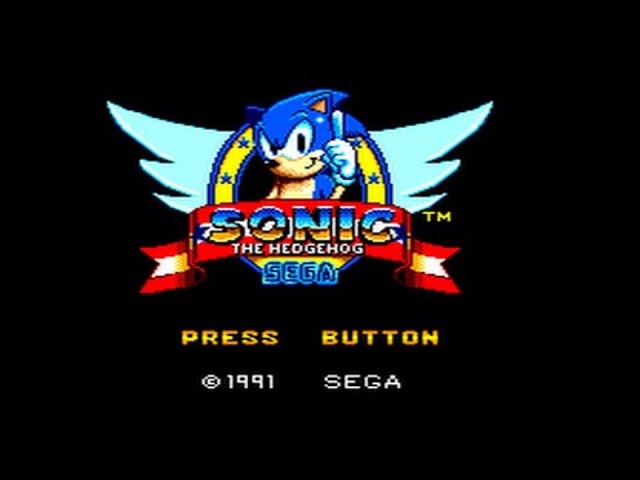
There's a scene everyone from my generation knows: the CRT TV switched to the AV input, that gray cartridge shoved into the Tectoy Master System and the fastest blue hedgehog in the world waiting for you to hit start. Except, unlike the rest of the planet, the Sonic I met first wasn't the Mega Drive one. It was the 8-bit Sonic the Hedgehog, released in 1991, and around here it became a family affair.
A Sonic made by a master of music
The detail few people knew back then: the 8-bit version wasn't made by the same team behind the Mega Drive game. Sega outsourced development to Ancient, the studio founded by composer Yuzo Koshiro — the same genius behind the Streets of Rage soundtracks. As the story goes, Koshiro set up Ancient precisely because Sega couldn't sign contracts with individuals, so he created the company to take on the project. It became a family business: his sister, Ayano Koshiro, handled direction, and his mother, Tomo Koshiro, helped behind the scenes too.
In other words: the Sonic Brazilian kids were playing was, deep down, the work of one of the greatest video game composers of all time. And you can feel it in every note.
Not a shrunken Mega Drive — it's a different game
Plenty of people grew up thinking the Master System Sonic was just a "gutted" version of the original. It isn't. It's a different game, with its own level design. The 8-bit hardware couldn't handle the vertical loops and the insane speed of its 16-bit sibling, so Ancient rethought everything: the stages are more horizontal, slower and lean far more on exploration than on pure speed.
The opening is still Green Hill Zone, to keep things familiar, but from there the game goes its own way. Exclusive stages appear that stuck in the memory of anyone who played it: the Bridge Zone, the Jungle Zone, the claustrophobic Labyrinth, plus Scrap Brain and Sky Base. No autopilot running here — you have to read the scenery, climb, drop and search.
Another difference that changed the strategy: the Chaos Emeralds were hidden inside the stages themselves, not in special stages like on the Mega Drive. You had to comb every corner of the map to find them and secure the full ending. And the classic of classics: when Sonic took damage, he lost his rings and, unlike the 16-bit version, you couldn't get them back afterward — the hit really hurt.
The Bridge Zone theme is legendary
If there's one thing that survives intact in the head of anyone who played it, it's the music. Koshiro rearranged several iconic tracks that Masato Nakamura composed for the Mega Drive game, but he also created original themes just for this version. And that's where the Bridge Zone comes in: that laid-back, almost beachy melody is still one of the most beloved tunes in the entire franchise. Plenty of people who never played the cartridge know the tune from how much it gets around. It's chiptune of the highest quality, made by someone who understood the craft like no one else.
Why THIS was the Brazilians' Sonic
Here comes the part that tugs at the heart. While the outside world was Nintendo territory, in Brazil the one calling the shots was Sega, through Tectoy. The Master System wasn't just another console here: it was the console. Tectoy manufactured, distributed and sold the machine like no one else, and it stayed firmly on Brazilian shelves for decades — long after it had been retired everywhere else on the planet.
Because of that, the math is simple and moving: for millions of Brazilian kids, the first Sonic of their lives wasn't the Mega Drive one — it was this one, the Master System one. While American and Japanese kids raced through 16-bit loops, we here explored the Bridge Zone and the Jungle Zone thinking that's how Sonic had always been. And for us, it was. This 8-bit hedgehog is part of an entire country's childhood.
Legacy: the Game Gear and the cartridge's long life
This same version, with small screen adjustments, also became the debut Sonic for the Game Gear, Sega's handheld — which helped spread the game even further. And in Brazil, thanks to the absurd longevity of the Master System under Tectoy, the cartridge kept being sold and played for far longer than anyone would have imagined. It's no exaggeration to say entire generations crossed paths over the very same cart.
Is it worth playing today?
It is, very much so. Precisely because it's slower and more exploratory, the Master System Sonic aged differently from its 16-bit sibling: it's more of a "thinking" platformer than a "reflex" one. Taking on the Bridge Zone again, hearing that soundtrack and hunting the hidden emeralds is a straight trip back to the 90s living room. Whether on a real Master System, a Game Gear or an emulator, this hedgehog deserves respect — for Brazil, it was the beginning of everything.
If you're Brazilian and had a Master System, you probably don't need me to explain any of this. You're already hearing the Bridge Zone tune just from reading. And that's exactly the point.