Donkey Kong Bananza: the demolition that redefines the Switch 2
We revisit Donkey Kong Bananza a year later: total destruction, Pauline singing and a 91 on Metacritic. The first 3D DK since 1999 is still the Switch 2's greatest showcase.
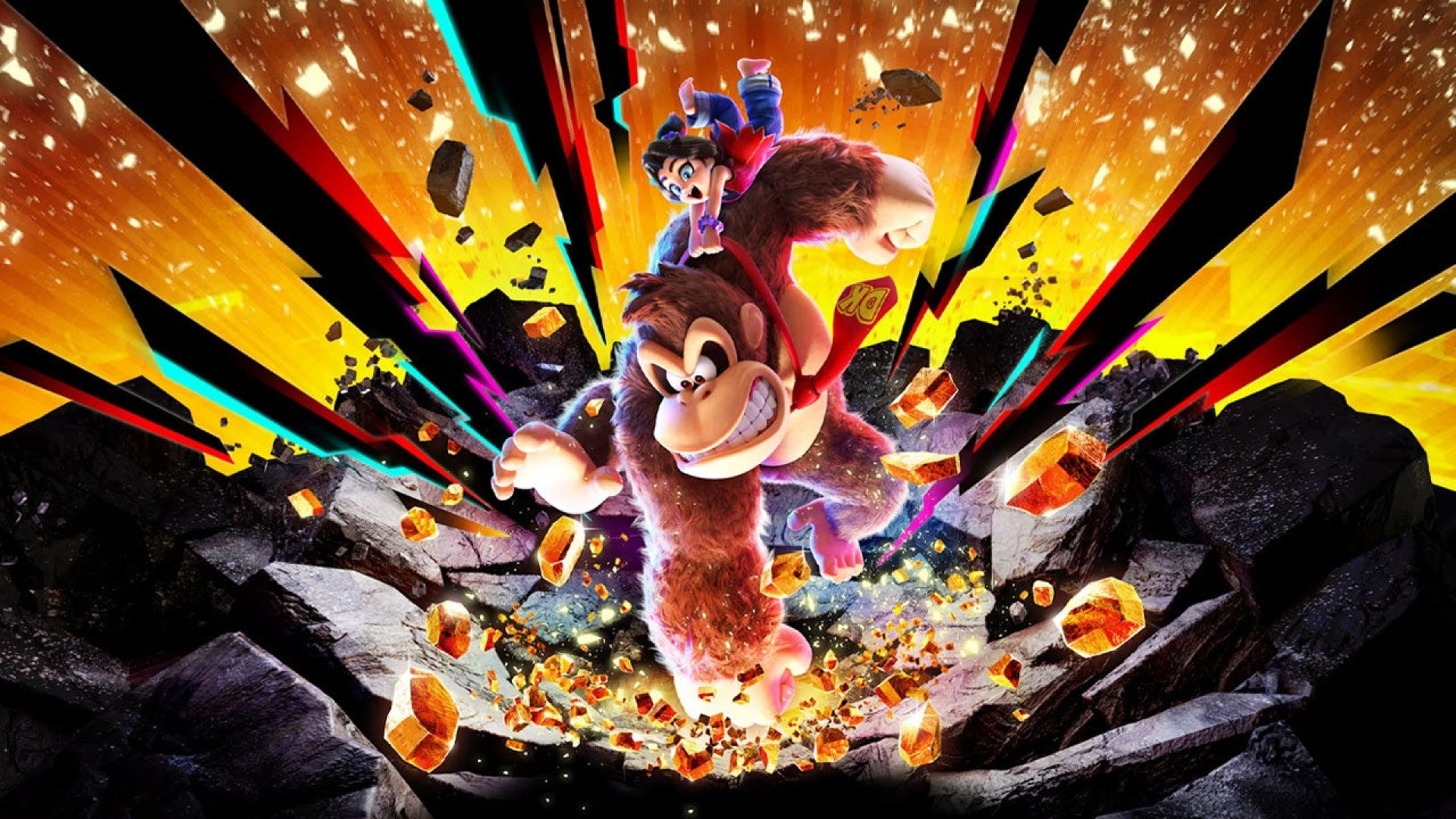
I'll admit I went into Donkey Kong Bananza with my guard up. A heavyweight launch title for the Switch 2, starring a gorilla who spent decades sidelined in Nintendo's 3D games? It could have gone wrong in a thousand ways. A year after launch, with the cartridge still living in my console, I can say without hesitation: it not only worked, it became the yardstick by which I measure everything that comes out for the Switch 2.
26 years of waiting: DK returns to 3D
To understand the scale of Bananza, you have to remember where we came from. The last fully 3D Donkey Kong was Donkey Kong 64, all the way back in 1999. Since then, the ape lived off excellent 2D platformers (the Country Returns series and Tropical Freeze), but never got another three-dimensional adventure of his own. When Nintendo announced that the Tokyo EPD team — the same studio behind Super Mario Odyssey, with Kenta Motokura producing — was behind the project, expectations shot through the roof. And the result lived up to them: with a 91 on Metacritic, Bananza tied precisely with DK64 as the best-reviewed game in the franchise's history and became the highest-rated Switch 2 exclusive on the console to date.
Punching the scenery has never felt this good
Bananza's masterstroke is turning destruction into a design language. Almost everything here is made of deformable voxels: DK punches the ground and opens craters, tears chunks off walls to use as a weapon or a surfboard, digs tunnels in any direction he likes and literally rewrites the level's topography. In the first few hours, I admit, I was just smashing everything for the tactile pleasure of it — the feedback from the punches is absurdly satisfying. But little by little the game reveals that destruction is also a puzzle: that collectible atop the cliff can be reached by climbing, by stacking soft terrain to build an improvised staircase, or simply by demolishing the whole mountain. It's the kind of freedom Breath of the Wild brought to the open world, now applied to the 3D platformer. After Bananza, indestructible scenery feels like a thing of the past.
Pauline steals the show
The story begins on Ingot Isle, where DK works mining the valuable Banandium Gems until the mysterious VoidCo corporation turns everything upside down and our hero plummets into the depths of the planet. It's there that he meets Pauline — here a 13-year-old girl, long before the mayor of New Donk City — who dreams of returning to the surface. The pair then set off toward the planet's core, where any wish is said to come true.
On paper, it's a Saturday-morning-cartoon plot. In practice, the chemistry between the brawny gorilla and the girl who rides on his shoulders carries the entire game. Pauline is no dead weight: her singing opens sound-sensitive passages, points out secrets and, above all, triggers DK's transformations. It's the most charismatic partnership Nintendo has built in years, and the journey's finale got to me in a way I didn't expect from a game about punching rocks.
Digging deep: the planet's layers
Instead of kingdoms scattered across a globe, Bananza organizes its world into stacked underground layers, each with its own biome and identity — there's a tropical layer, a lava layer, a frozen layer, and each hides sub-layers, shortcuts and the cozy Getaways, refuges where you can rest and change outfits. The vertical structure completely changes the logic of exploration: the path to the next objective is almost never a door, but a hole you dig yourself. The Banandium Gems play the role of Odyssey's Moons as the main collectible, feeding a generous skill tree, while fossils scattered across the world buy clothes and upgrades. I spent hours poking into corners the game doesn't even signal, just because the answer to "can I dig all the way over there?" is almost always yes.
Bananza: the transformations that change the game
The Bananza transformations are the seasoning that was missing. On finding the Elders scattered across the layers, DK gains animal forms activated by Pauline's singing and limited only by his Bananergy bar: the Kong Bananza rips through terrain like butter, the zebra bolts at high speed over fragile surfaces, the ostrich glides and bombards enemies with eggs, and there are still other surprises I'd rather not spoil. The clever part is that the forms aren't keys to specific locks: you can switch freely and combine them with terrain destruction to create solutions the level design clearly anticipates but never imposes. It's Odyssey cubed.
A Switch 2 showcase — with asterisks
Visually, Bananza is a spectacle: DK's expressiveness would be the envy of an animation studio, and watching the scenery crumble into thousands of physical pieces without the console choking is the kind of thing the original Switch would never dream of. But it's not all bananas. Digital Foundry's technical analysis rated the result as "somewhat mixed": the game targets 60 fps with dynamic resolution between 1080p and 1200p docked, but uses FSR 1 instead of DLSS, and the double-buffered v-sync means performance drops momentarily knock the rate down to 30 fps — noticeable in some bosses and in the most chaotic moments of destruction. In handheld mode, curiously, the experience felt more stable to me, running at a consistent 1080p. None of this ruins the game, far from it, but it's honest to say the showcase has the odd fingerprint on the glass.
A soundtrack that sings along
The soundtrack understood the game itself: when DK activates a transformation, Pauline literally sings that form's theme, turning every power-up into a little musical number that had me grinning from start to finish. Among catchy original tracks, there are affectionate reworks of classic franchise themes — including a wink at the legendary DK Rap that got this old Nintendo 64 player up off the couch. It's one of those soundtracks that keep playing in your head weeks later.
Co-op: guaranteed couch fun
The cooperative mode is more modest than the campaign, but it works very well in the "come play with me" spirit: the second player takes on Pauline and fires vocal projectiles to clear the way and stun enemies, even able to aim using the Joy-Con 2's mouse mode — one of the first genuinely natural demonstrations of the feature. It was the perfect way to introduce the game to someone who isn't comfortable with a 3D camera: DK handles navigation, Pauline the artillery, and everyone has fun.
Twelve months after launch, the numbers tell part of the story — 3.49 million copies sold by the end of September 2025 , according to Nintendo's fiscal report, making Bananza one of the biggest hits of the console's first wave. But the statistic that matters is another: it's the Switch 2 game I've gone back to the most. Every visit I discover a hidden Banandium Gem, a tunnel I hadn't dug, a stupid and brilliant solution to a challenge I'd solved "the right way" the first time. Donkey Kong Bananza takes Super Mario Odyssey's philosophy of freedom and carries it underground, literally and figuratively. It's creative, generous, funny and technically ambitious — even with its performance hiccups. If you have a Switch 2 and haven't played it yet, you owe it to yourself. If you don't have the console yet, well... this is the game that justifies the purchase. Pros: revolutionary terrain destruction; charismatic Pauline; creative Bananza transformations; memorable sung soundtrack; a world dense with secrets. Cons: occasional frame rate drops (double-buffered v-sync); use of FSR 1 instead of DLSS; co-op too simple for anyone hoping for a two-player campaign.