Super Mario 64 DS: the handheld remake that challenged the analog stick
We revisit Super Mario 64 DS, the DS launch remake from 2004, comparing it to the 1996 original: extra characters, 150 stars, minigames and the eternal D-pad versus analog duel.
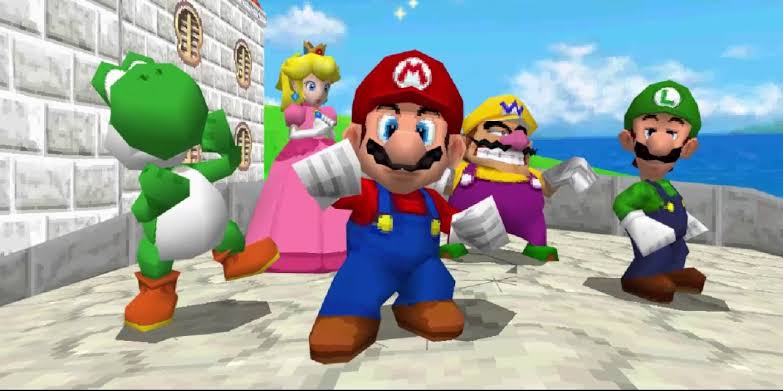
There are games you don't review: you reunite with them. I grabbed my Nintendo DS, blew on the cartridge out of pure ritual (yes, I know you don't have to) and dove back into Super Mario 64 DS. Then I fired up the Nintendo 64 and played the 1996 original side by side, stage by stage, to answer a question that has haunted me for twenty years: is the handheld remake really the definitive version of the game that invented the 3D platformer — or does the classic remain unbeatable?
A 1996 classic in the palm of your hand
Quick context for those who didn't live through the era: on November 21, 2004, the Nintendo DS hit North American stores (Japan followed shortly after, on December 2), with two screens, a touchscreen and a proposal that was downright bizarre by the standards of the time. And what game did Nintendo choose to prove that strange device had muscle? None other than a remake of Super Mario 64, the 1996 title that opened the Nintendo 64 era, defined the grammar of 3D games and introduced the world to the analog stick as we know it.
The message was bold: "the console that revolutionized the 90s now fits in your pocket." And, technically, it was true. Seeing Peach's castle running smoothly on a handheld in 2004 was one of those jaw-dropping moments you never forget. The public bought the idea: more than 11 million copies were sold over the DS's lifetime, placing the remake among the ten best-selling games on the handheld, with an average score of 85 on Metacritic.
What the DS added to the original
Here's where the remake shines most: this isn't a lazy port, it's a generous reimagining. The list of new features is long:
- Four playable characters: for the first time, Mario isn't alone — and he isn't even the starting protagonist. You begin the adventure with Yoshi and have to rescue Mario, Luigi and Wario throughout the game. Each has their own physics: Yoshi floats with the flutter jump and swallows enemies, Luigi runs faster and takes a few steps across water, and Wario is heavy but breaks blocks no one else can. Historical note: to this day it's the only game in the main Super Mario series in which Wario is playable.
- 150 stars versus 120: that's 30 more Power Stars than on the N64, scattered across new challenges, brand-new areas (like Sunshine Isles) and missions exclusive to each character, including the rabbits you chase around the castle.
- New bosses: Goomboss, King Boo and Chief Chilly guard the keys that unlock the other characters, giving real purpose to the expanded structure.
- Power Flower: in place of the original's three colored caps, each character gains their own power — Mario inflates and floats, Luigi turns invisible, Wario becomes metal and Yoshi breathes fire.
- 36 minigames: playable on the touchscreen, from Luigi's poker to Wario's slingshot. It sounds trivial, but many of them became the seed of what would be the New Super Mario Bros. series and of the very concept of the tactile minigame that dominated the DS.
- Multiplayer for up to 4 players: via Download Play, with a single cartridge, everyone hunting stars in an arena. In 2004, that was pure sorcery in the schoolyard.
Going back to the N64 after that, the original almost feels... empty? The 1996 castle is quieter, more solitary. Some prefer it that way, and I get it — but in pure content, the DS wins comfortably.
Controls: the D-pad versus the analog stick
We arrive at the elephant in the room. Super Mario 64 was born for the analog stick — the game and the N64's controller were designed together, each justifying the other. The precision of tiptoeing near a chasm, gradually accelerating around a curve, measuring your run before a triple jump: everything in Super Mario 64 depends on analog movement.
And the original DS... had no analog stick. Nintendo offered three solutions: the digital D-pad with a run button (2D Mario style), touchscreen control by sliding the stylus, and the infamous thumb strap — a little strap with a nub for your thumb that came in the DS box. Being honest, none of the three reproduce the feel of the N64 stick. In my comparative marathon, the D-pad proved the most reliable: after an hour, my brain recalibrated and I started playing in "classic Mario mode," running with the button held down. It works well in 90% of the game. The problem is the other 10%: the narrow bridges of Rainbow Ride, the races against the penguin, any mission that requires walking slowly on a diagonal. There, the N64 wins hands down, and the critics of the era hit exactly that nerve — the absence of the analog stick made the controls harder than in the original game.
Worth noting: can someone playing today on a Nintendo 3DS use the analog slide pad? No — the game still reads only digital input, so the debate remains alive. It's the remake's biggest asterisk, and there's no pretending it doesn't exist.
Graphics: 2004 versus 1996
Visually, the fight is less even than nostalgia suggests. The DS models have a higher polygon count than the N64's: the 2004 Mario has fingers, a modeled cap and an expressive face, while the 1996 one is a charming origami of pointy vertices. Textures were redone, the castle gained detail, and the frame rate stays stable. On the DS's small screen, everything looks dense and carefully crafted.
But the N64 has its trump cards. The original game runs on a TV, with that characteristic texture smoothing of the console that gives the visuals a dreamlike, almost watercolor air, perfectly matching the surreal tone of the worlds inside the paintings. The DS, without equivalent filtering, has more obvious jaggies when you pay attention. It's the difference between a painting and a scale model: the model has more pieces, but the painting has atmosphere. In 2026, with both running on original hardware, I'd say the DS aged better technically — and the N64, aesthetically.
What each version does better
- Better on the DS: amount of content (150 stars, 4 characters, extra bosses), models and textures, minigames, multiplayer, map on the second screen and portability — Super Mario 64 in ten-minute sessions in a bank queue is a luxury.
- Better on the N64: the analog stick (by a mile), the fluidity of Mario's original moveset without depending on switching characters, the big-screen presentation and that 1996 feeling of stepping into a 3D world for the first time.
Which is worth playing today?
My honest answer: it depends on what you're looking for. If you want to study the classic — to understand why Super Mario 64 changed video games — go with the N64 (or the original version available in the Switch's Nintendo 64 catalog), because the analog stick is half the experience. If you want the most complete version of the game, with more to do, different characters and a pile of new secrets, the DS is the choice, and it runs beautifully on any DS or 3DS. I finished my marathon alternating between the two without being able to abandon either — which is perhaps the best review possible.
Super Mario 64 DS is one of the most generous remakes Nintendo has ever made: more stars, more characters, more worlds, more reasons to return to Peach's castle. At the same time, it's a remake that trades the original's mechanical soul — the analog stick — for ingenious yet imperfect solutions. The result is an essential game with a permanent asterisk: the best version in content, the second best in feel. Twenty-two years after the DS's launch, it remains my recommendation for getting to know (or revisiting) the world of Super Mario 64 in your pocket — as long as you accept making peace with the D-pad. Score 8.5: a classic expanded with care, held back only by the hardware that housed it.